
Someone recently asked the artificial intelligence program ChatGPT to tell the story of Boston’s legendary Beautiful Music/Easy Listening station WJIB, which launched at Midnight on September 15, 1967!
It was then shared with several of us by Warren, who several years ago created a replica of that original sound as an Internet station known as Jib on the Web, which lives on today but under a different name! I’ll share all the details after you’ve read what ChatGPT has to say about WJIB and its history:
WJIB-FM 97:
Boston’s Original Beautiful Music Sound
When people remember the golden age of Boston FM radio, WJIB-FM 97 occupies a special place. Although the station did not actually become WJIB until 1967, its roots went back to WXHR-FM, one of Boston’s early FM stations. WXHR had been primarily a classical-music operation, broadcasting from studios and a transmitter site on Zion Hill in Woburn.
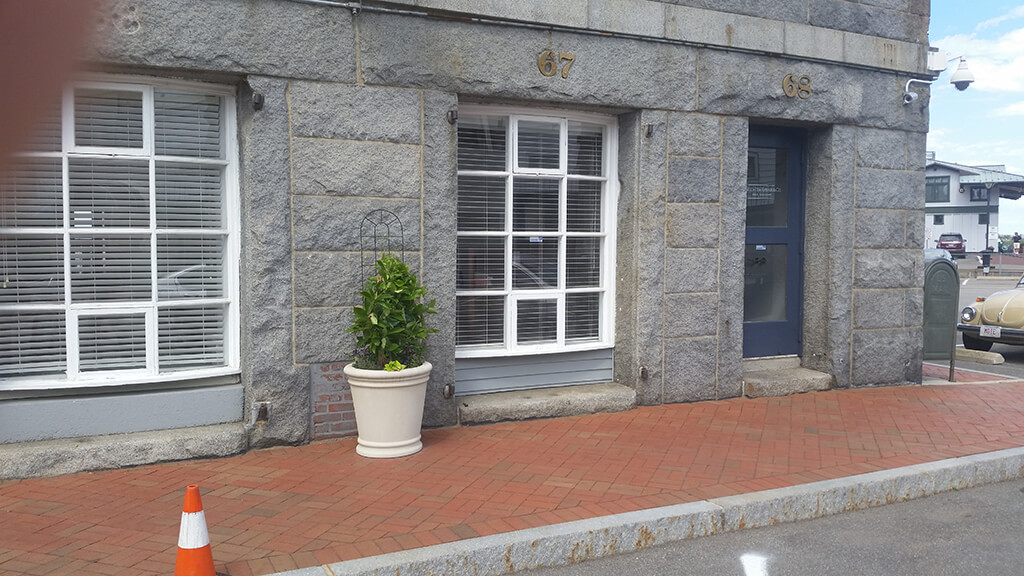
The transformation came after Kaiser Broadcasting and the Boston Globe acquired WXHR’s AM-FM-TV properties in the mid-1960s. The FM station adopted the call letters WJIB and moved its studios to 68 Commercial Wharf on Boston’s waterfront. More importantly, it abandoned classical music for the emerging format that would become known as beautiful music.
And what a sound it was.
WJIB’s music was built around lush orchestral arrangements, familiar melodies, gentle tempos, and an almost complete absence of the frenetic personality that characterized much AM radio. Mantovani, Percy Faith, Ray Conniff, André Kostelanetz, Frank Chacksfield, 101 Strings, and other orchestras could provide the musical backdrop, while occasional vocals were carefully selected to complement rather than interrupt the flow.
The idea was not simply to play “easy listening” records. It was to create an atmosphere.
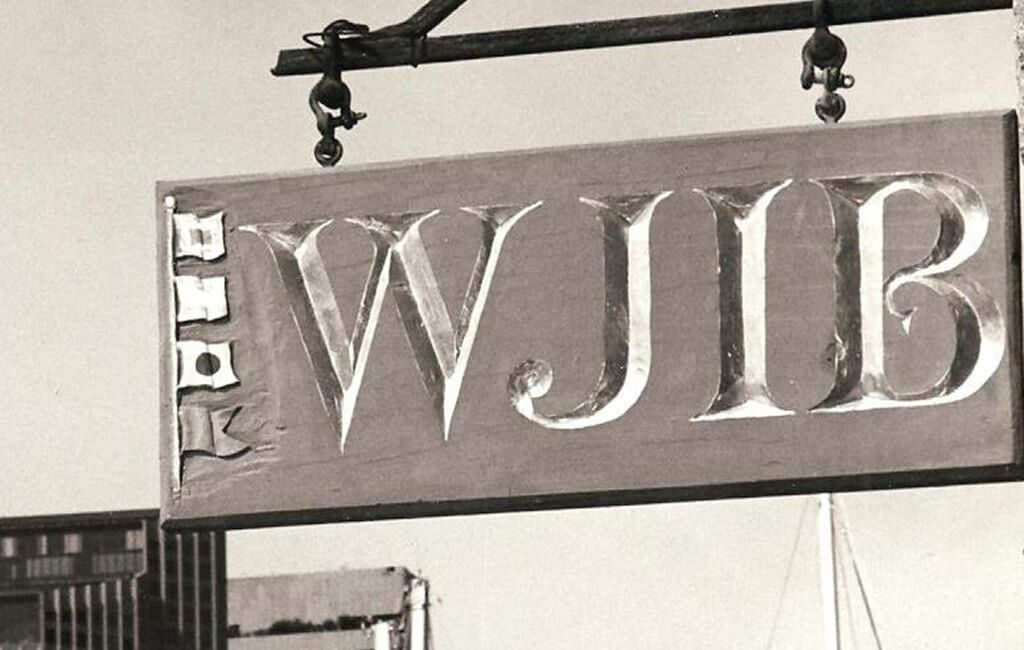
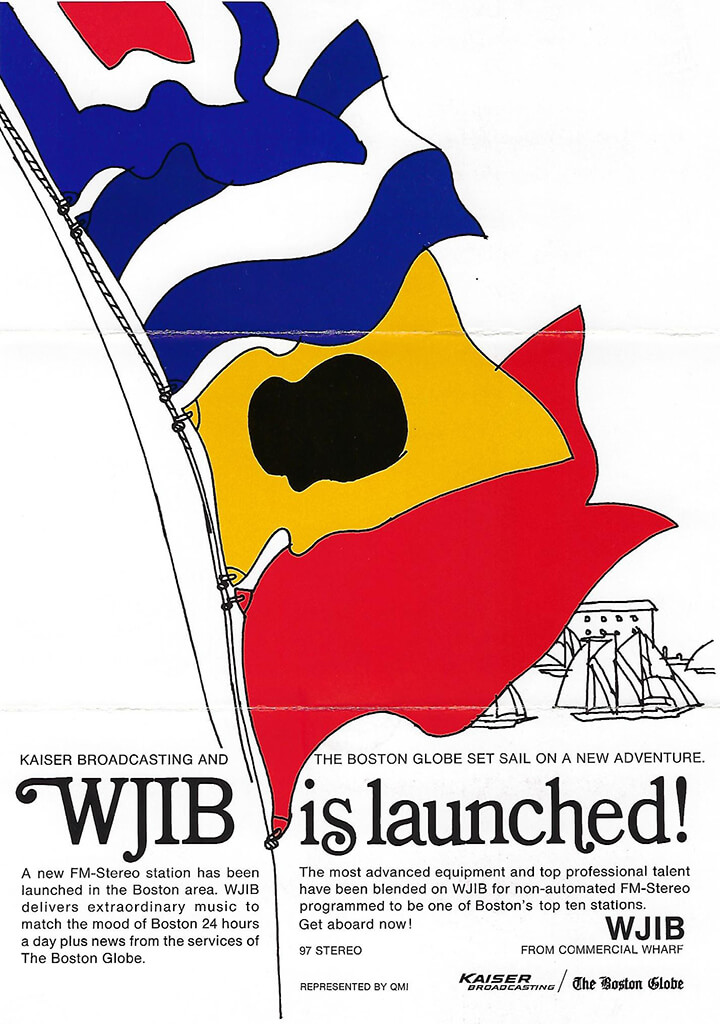
WJIB became particularly memorable for its nautical identity. The call letters themselves suggested “JIB,” the triangular sail, and the station reinforced the theme with ship’s bells and seagull sounds in its hourly identification. That distinctive audio signature became one of the most recognizable elements of FM 97.
A new kind of radio
The timing was important. During the early 1960s, AM radio was still dominant, and relatively few people were paying much attention to FM. But that was beginning to change. By the latter part of the decade, better FM receivers, stereo equipment, and the growth of FM broadcasting were creating an entirely new listening environment.
WJIB was perfectly positioned to take advantage of it.
Beautiful music offered something radically different from the increasingly frantic Top 40 sound: music that could be left on for hours without becoming tiring. It was ideal for the living room, the office, dinner, reading, entertaining—or simply looking out the window on a quiet evening.
Boston embraced it.
WJIB ultimately became the first commercially successful FM station in Boston, and its beautiful-music format would eventually make it Boston’s most-listened-to radio station, a position it maintained for many years.
There is also an interesting connection to the broader history of the format. Marlin Taylor, one of the most influential architects of modern beautiful music, had been involved in Boston radio and was instrumental in developing the WJIB concept before going on to make the format famous nationally, particularly at WRFM in New York.
The sound of FM 97
Perhaps the best way to understand WJIB is to think of it less as a conventional radio station and more as a carefully constructed musical environment.
There were no screaming jingles.
No rapid-fire disc jockey chatter.
No barrage of commercials.
Instead, there was a quiet voice, a graceful segue, the sound of an orchestra—and then another melody beginning almost before the previous one had completely disappeared.
That matched-flow philosophy became central to the beautiful-music format. The objective was continuity: one musical selection leading naturally into another so that the listener experienced an uninterrupted stream of sound.
It was radio designed to lower the pulse rather than raise it.
And that is why WJIB-FM 97 became so important. It helped establish the idea that FM could be something fundamentally different from AM: stereo, spacious, sophisticated, musical, and immersive.
For listeners in Boston in the late 1960s, turning the dial to FM 97 could feel like stepping away from the noise of the city and entering another world.
WJIB wasn’t simply playing beautiful music. It was creating a place to go.
That concept is very much at the heart of what made the great beautiful-music stations of the 1960s and 1970s—and it is also why the WJIB legacy remains so relevant to The Elegant Sound today.
Yes, the great WJIB sound lives on under the name The Elegant Sound!
Phew, isn’t that something? I doubt a human could have written that, at least not without doing hours of research! As far as I know, no human was involved, even in adding the highlights to certain words and phrases!
Back in the 1990’s, after the format had been dropped by the new owners of the station, the call letters were changed, making them available to whomever. Later, they were picked up by an AM radio station … which just so happened to be WJIB’s original sister station referenced at the beginning of the story and had been using the call letters of WCAS.
The owner at the time smartly decided it’d be beneficial to trade on those famous call letters of WJIB. Later, when the AM station changed ownership, the new owners felt a need to challenge those call letters being used on this Internet station referencing the original WJIB and the great online following it had built up; hence, to avoid what could have become a messy legal battle – as noted above – its much-loved musical format lives on as The Elegant Sound!
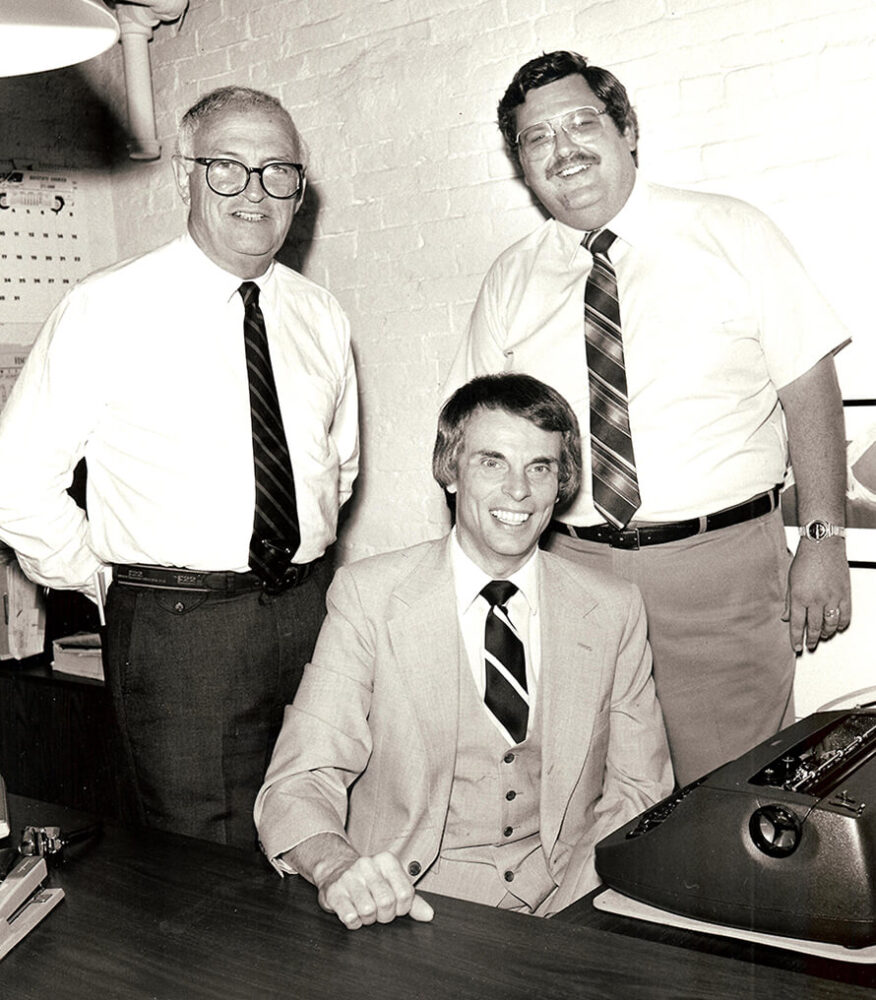
While I joined the station some weeks before sign-on in order to build the record library and begin to assemble the programming, my stay with WJIB would only last eight months (for reasons I won’t get into) – after having greatly expanding the library of LP recordings and firmly setting the “tone” of the musical sound … which had attracted an extremely large following in a very short time, including letters to the Editor of the Boston Globe newspaper and co-owner of the station, lauding the newspaper for its role in bringing this wonderful station to Boston … I made the decision to depart WJIB and return south.
As I remember, Warren – who is maestro of The Elegant Sound – did not directly replace me, but would soon take over the programming of the station!
In closing, let me thank you for reading and invite you to share any comments, questions, or challenges you may have!








Chat GPT is technology even I don’t fully understand although I find myself using it more and more… and rightfully so!
The history, while I can tell it lacks a human touch, is fairly accurate based on what I’ve learned over the years. It has likely cobbled the information from several sources, but succinctly nonetheless.
Thank you, Eric … appreciate hearing from you!
Hi, Marlin. Yes, “The Elegant Sound” on the internet is absolutely consistent with the sound of the beautiful music stations of the 60s, 70s, and 80s, but it has a MUCH more extensive library than those terrestrial stations ever had. It’s REALLY worth giving a listen to! –Neil
Nice to hear from you, Neil … and appreciate your input!
I enjoyed reading about WJIB, Marlin.
AI has the ability to pull from resources from around the world, so it’s not surprising it would tell a good story. And it’s probably better with history than some other tasks, such as forward thinking, as it only knows what’s already been written.
Thanks for sharing & I hope you’re doing well.
Oh — and thank you for telling us about The Elegant Sound. I have now bookmarked it on my computer and downloaded the link on TuneIn.
I wish I could figure out how to get it on my internet radio too, but haven’t figured how to do that yet. If you have a suggestion, please let me know.
Thanks, Marlin
I found “The Elegant Sound” on both my Internet radio and on TuneIn.
I’ve been looking for a stream like this for a long time and am thoroughly enjoying it!
Thank You for alerting me – and others – to this wonderful music format’s availability.
Thanks, Dick … appreciate all of your comments.
Yes, I’m doing reasonably well for an old man … I trust that you two are doing the same!