Picking up where I left off in Picture Show # 10 … by the mid-Summer of 1969, most of my on-air changes were in place, and we had begun to promote WRFM. While the dial cards, plus the advertising the station had credit for in the various print publications, we sensed were having an impact, we had no idea when we’d see an increase in listenership reflected in the audience ratings reports … up ‘til this time, WRFM was ranked down in the low 20s station-wise.
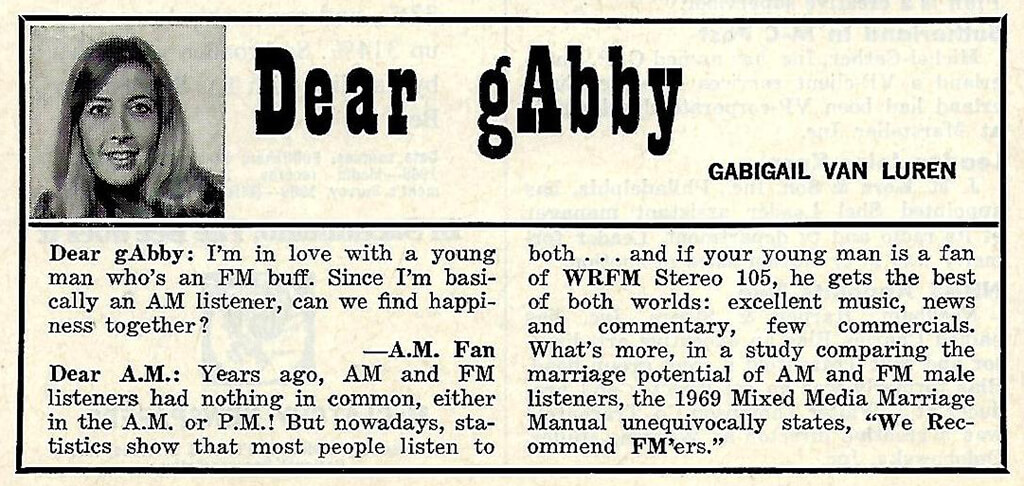
We soon realized that the food industry relied on radio for advertising to reach the huge population of the New York metropolitan area… while we’d have to demonstrate solid listenership before most would spend any real money with WRFM. Yet, to condition the ad agency timebuyers for when we did have them, we needed to make them fully aware of the station. To do so, we turned to these tongue-in-cheek ads, created initially by our promotions director, Marion Kurtz, who became Gabby. Well, it wasn’t long before Gabby was attracting attention to Marion, so soon she received an employment offer she couldn’t refuse.
By that point, it was December 1969, and the arrival of the radio Fall ratings report! And, what brought surprise and joy in some quarters and anguish in others (principally in the sales departments of other radio stations), WRFM had come from “nowhere” to Number 10 of all stations in the New York market!
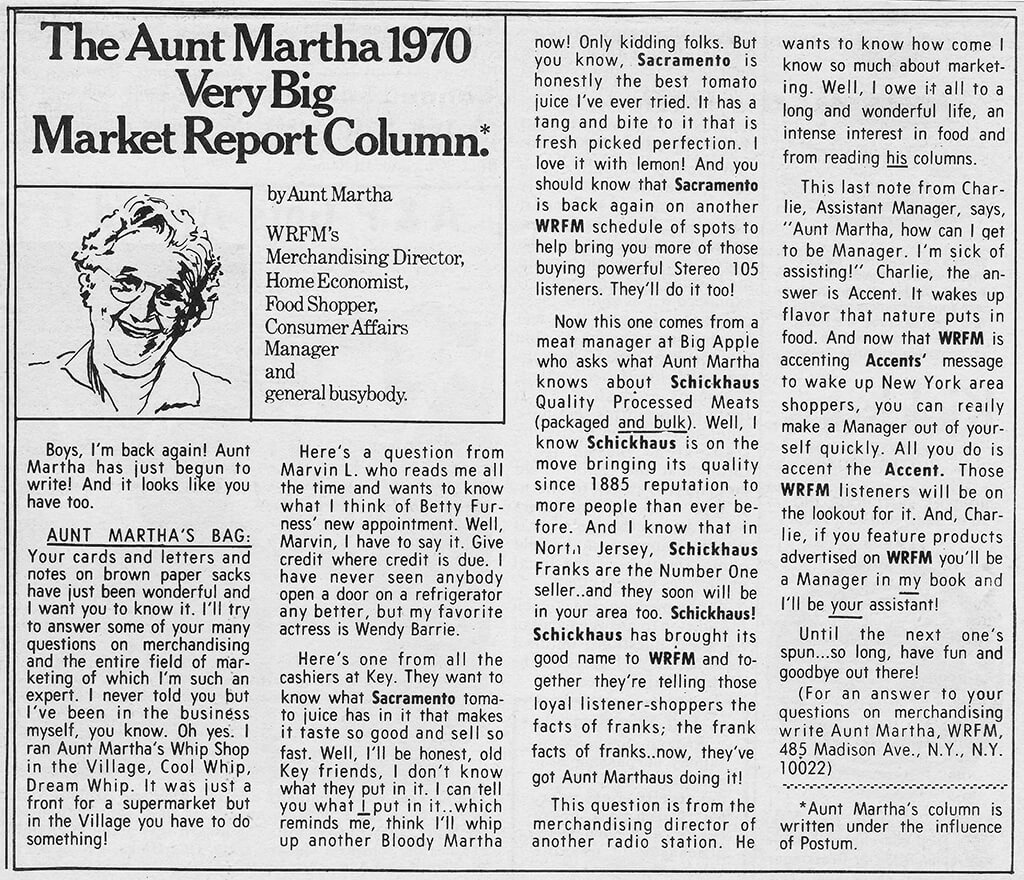
Timing was perfect for Marion to be replaced by Jim Aylward – who would later become WRFM’s morning show host – who brought in his “Aunt Martha” to handle a relationship with the food industry through their industry publication, Modern Grocer!
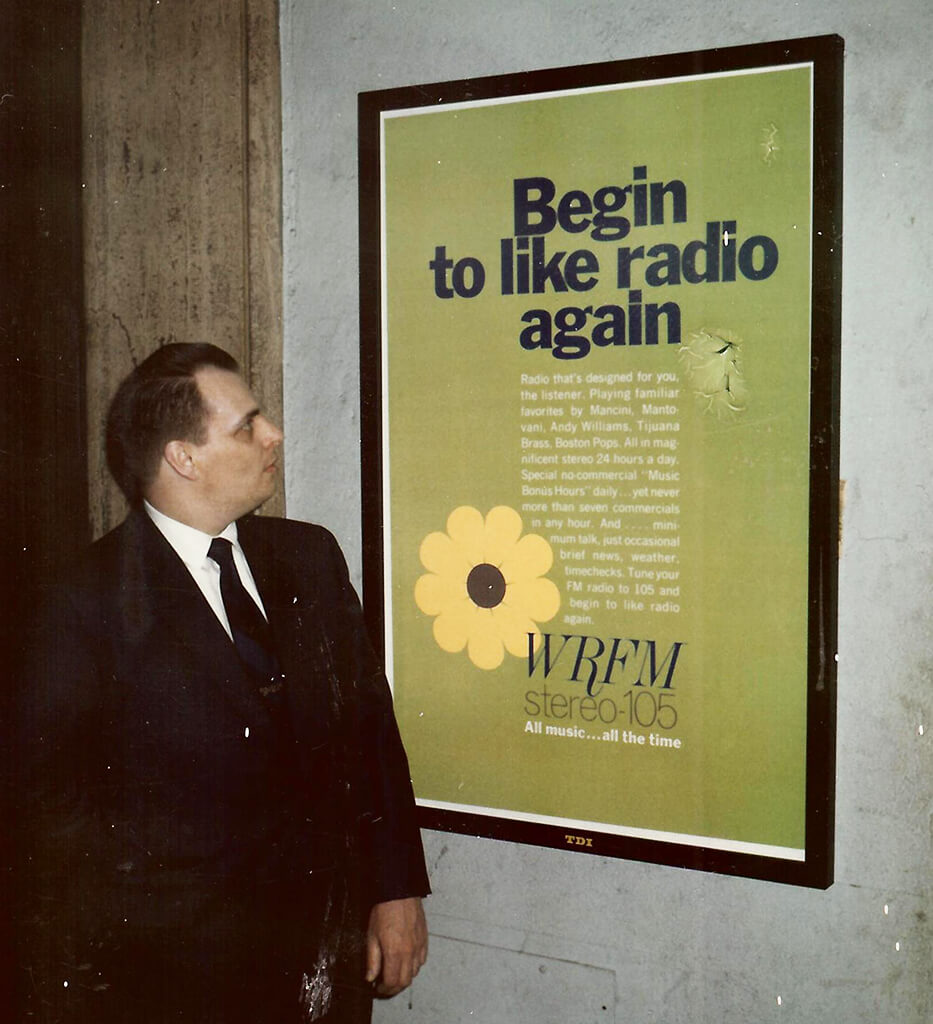
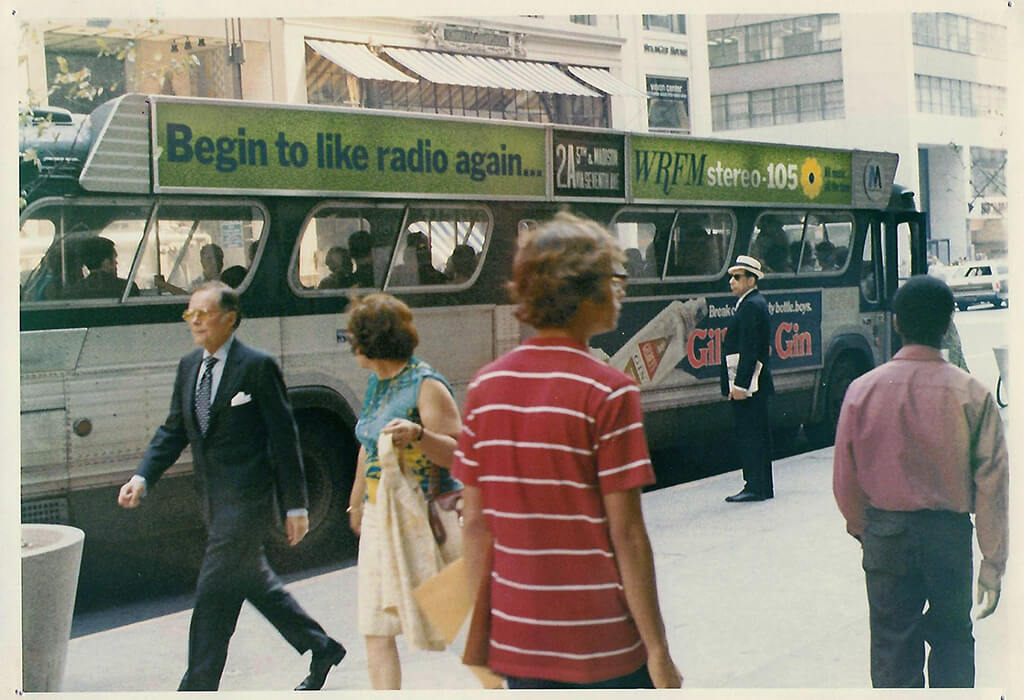
As we rolled into 1970, it was time to beef up our advertising to cement our new position in this competitive marketplace … especially after the next ratings report showed that WRFM now ranked Number 5 in listenership! Since we were offered a great deal price-wise on bus and train station signage, plus these bus-top lighted signs, that was the route we took initially, using our great new slogan, “Begin to Like Radio Again.”
And, they were soon followed by this subway poster on the left:
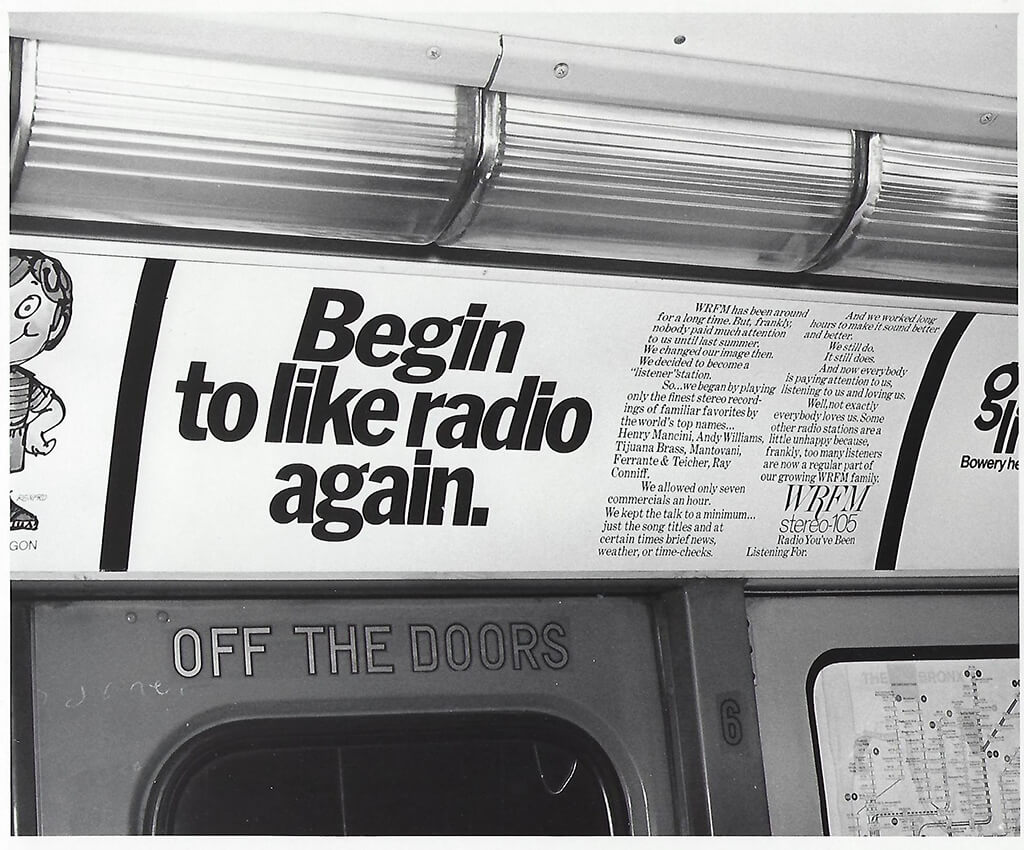
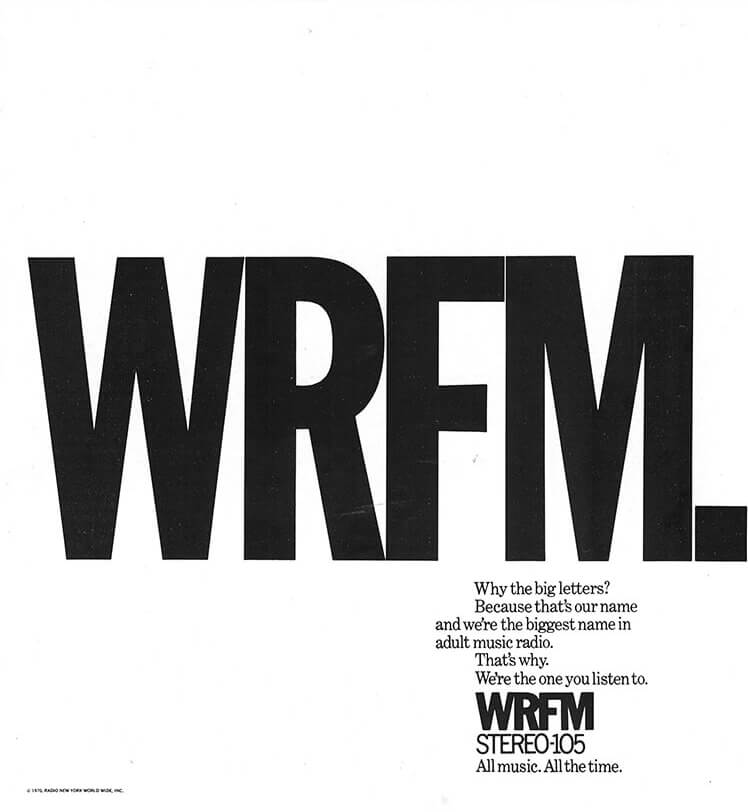
Come Summer 1970, the Spring ratings report showed a little “softness” in listenership … which can easily be one of the quirks of rating methodology; however, taking no chances, I quickly bought an end panel in every subway car in the New York City system, which you see on the right. This was followed by a run of the Radio Pollution Fighters subway ad.
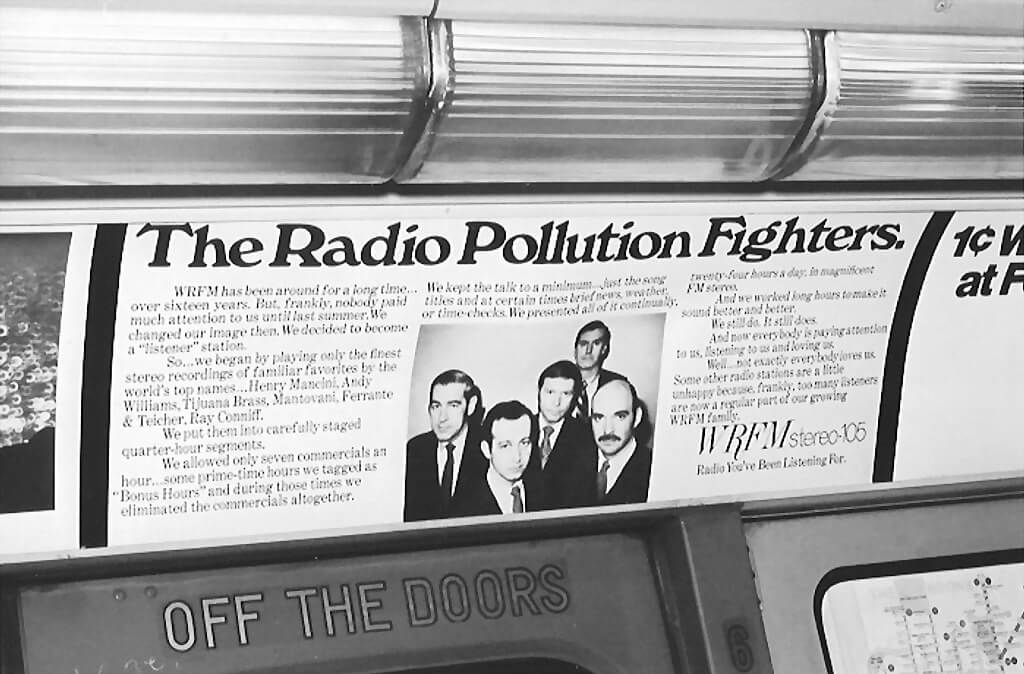
Things have likely changed these days; however, remember … this was 50-plus years ago – at that time, a broad cross-section of the Metro Area population were regular riders of the subways!
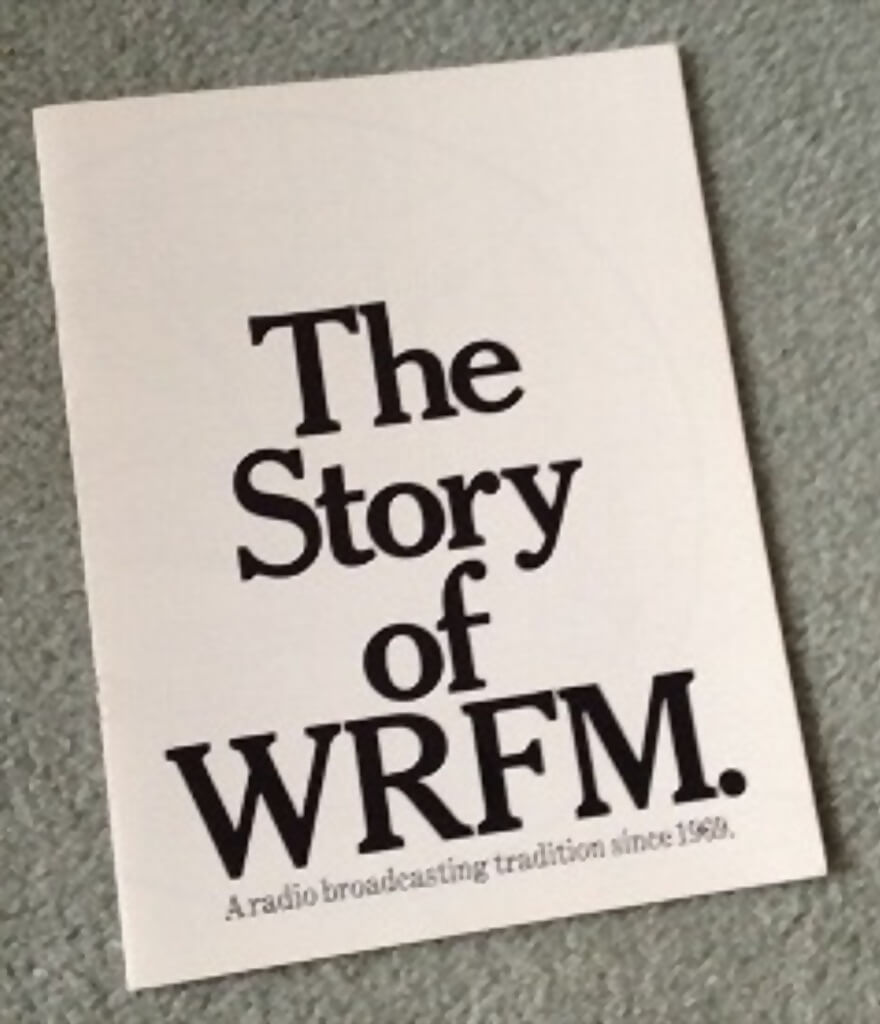
In late 1970, we assembled this brochure targeting the advertising and business communities to share our full story … the kicker line at the bottom of the cover was this slightly tongue-in-cheek line: “A Radio Broadcasting tradition since 1969.”
Come 1971, with WRFM firmly planted in a top position in the U. S.’s largest market, Arch Madsen, president of owner Bonneville International Corporation, asked me to give up the managership of WRFM to become a corporate vice-president overseeing what would soon be a total of seven owned FM stations, including WRFM. I had mixed emotions about the change, but I had too much respect for Mr. Madsen to really turn him down.
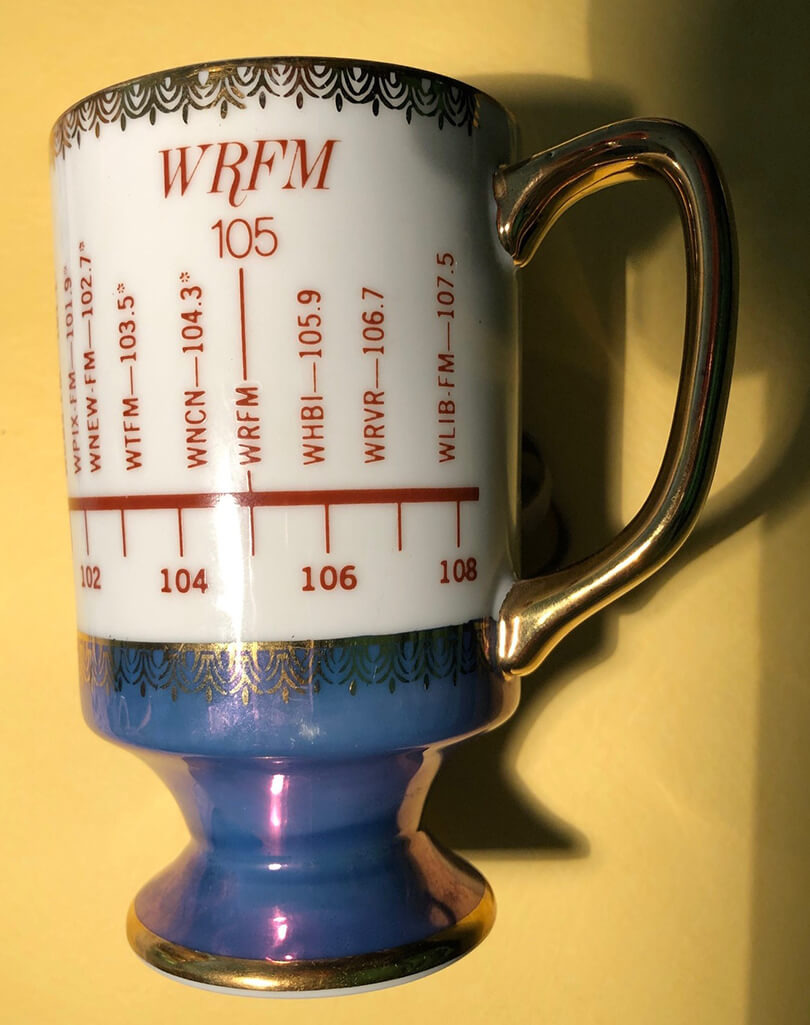
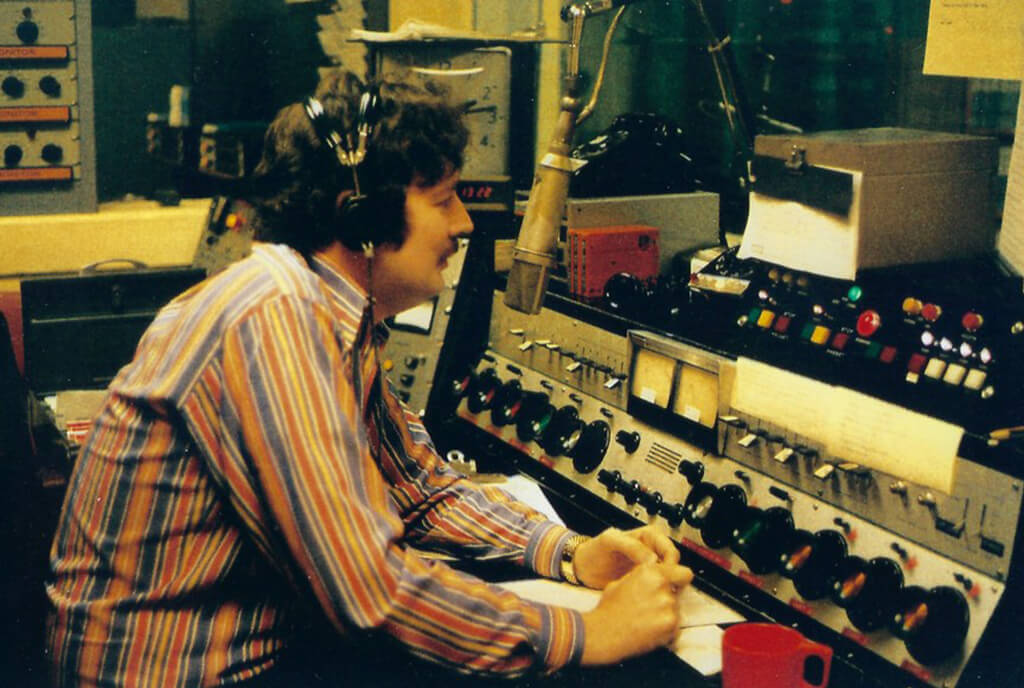
Wrapping up my time with WRFM, I conceived this idea of wrapping this fancy mug with the station’s FM Dial Card art. I managed to locate the Japanese manufacturer and was able to produce this limited run. Finally, as pictured in my memoir, here’s WRFM’s afternoon host Ken Lamb … whose voice and style is the epitome of the desired style of announcer for this radio format!
As we move into Chapter 10 of my memoir, picture-wise, our new separate entity … I’ve already convinced Mr. Madsen that what would need to be done to serve the seven stations effectively requires additional facilities and staff, why not make our services available to stations in non-competitive markets? He quickly agreed!
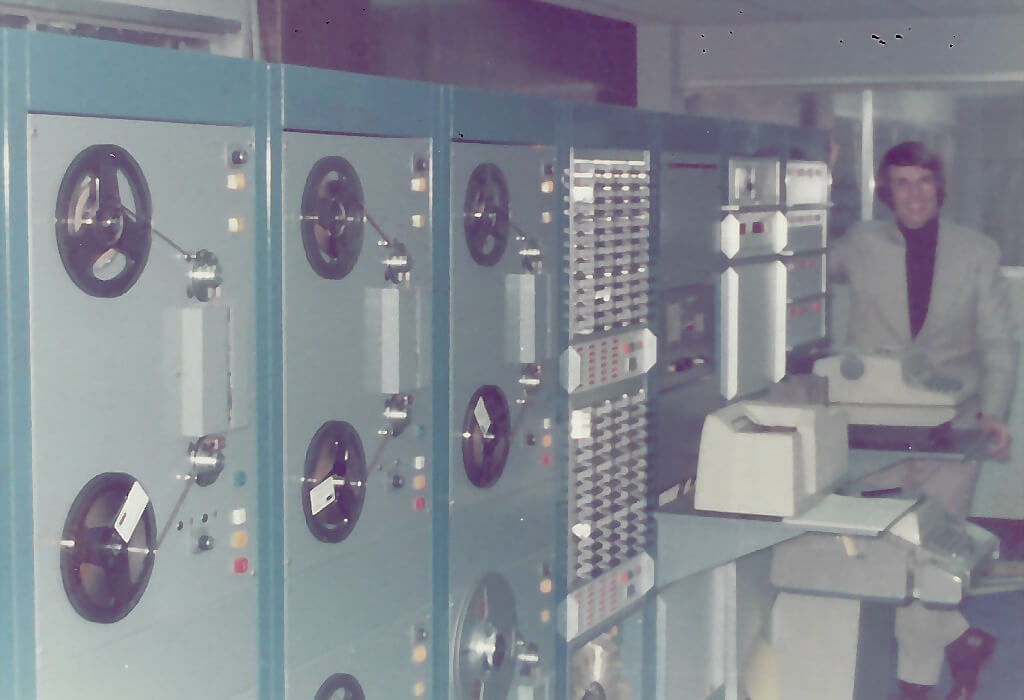
We quickly brought on board several non-Bonneville stations, and in July 1971, I traveled to Los Angeles to set up KBIG-FM with our music and formatics, as this was literally an embarrassment and waste of one of the best FM signals in America as far as its signal was the best in the Nation’s second-largest market, yet was being run as a total stepchild to an inferior AM signal. Plus, they had installed the largest radio automation system I’ve ever seen, giving them many hours of unattended operation! (My apologies for this pure quality photo, but I wanted you to see the immensity of it – of course, that’s yours truly in this picture from more than 50 years ago.)
Up to this time, I’m not sure if the station even appeared in any audience ratings report; however, with the programming change, it didn’t take long for word to spread.
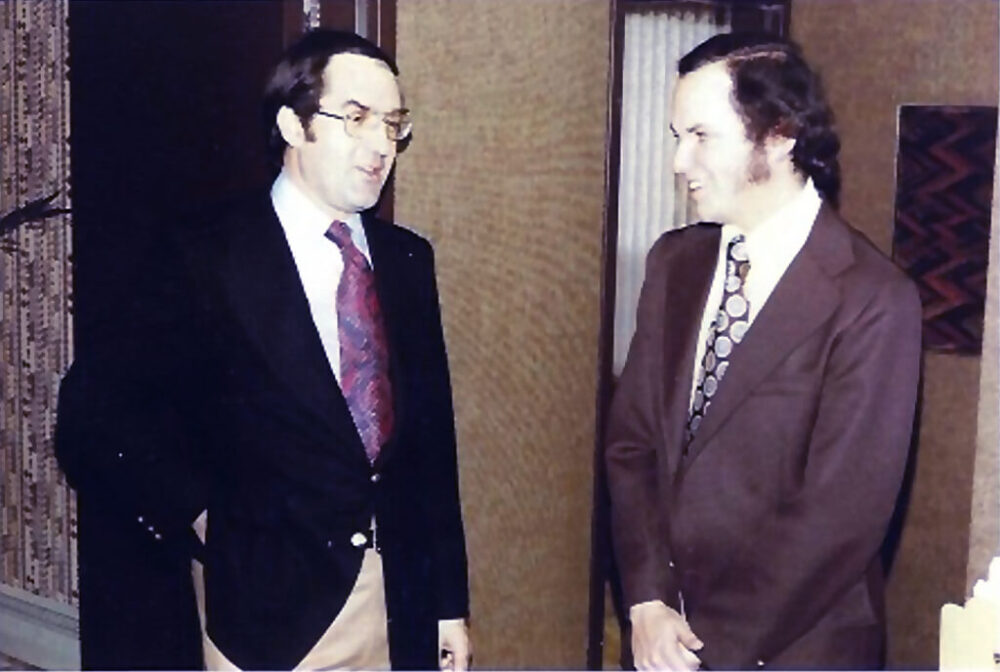
After initially moving to our own space at 485 Madison Avenue in the City, it was agreed that locating across the River in Bergen County, New Jersey, made economic sense, and we completed that move in 1974. And that’s where the young man on the right came into the picture … that’s Walter Powers, who we encountered as a part-time employee of KRAV in Tulsa, Oklahoma, which had become a client station. We brought him to New Jersey as Director of Operations; a perfect fit, as he was a master of detail, which was vital to our growing list of clients. He is seen here with Loring Fisher, who was our first non-WRFM hire, to be vice-president of sales and administration.
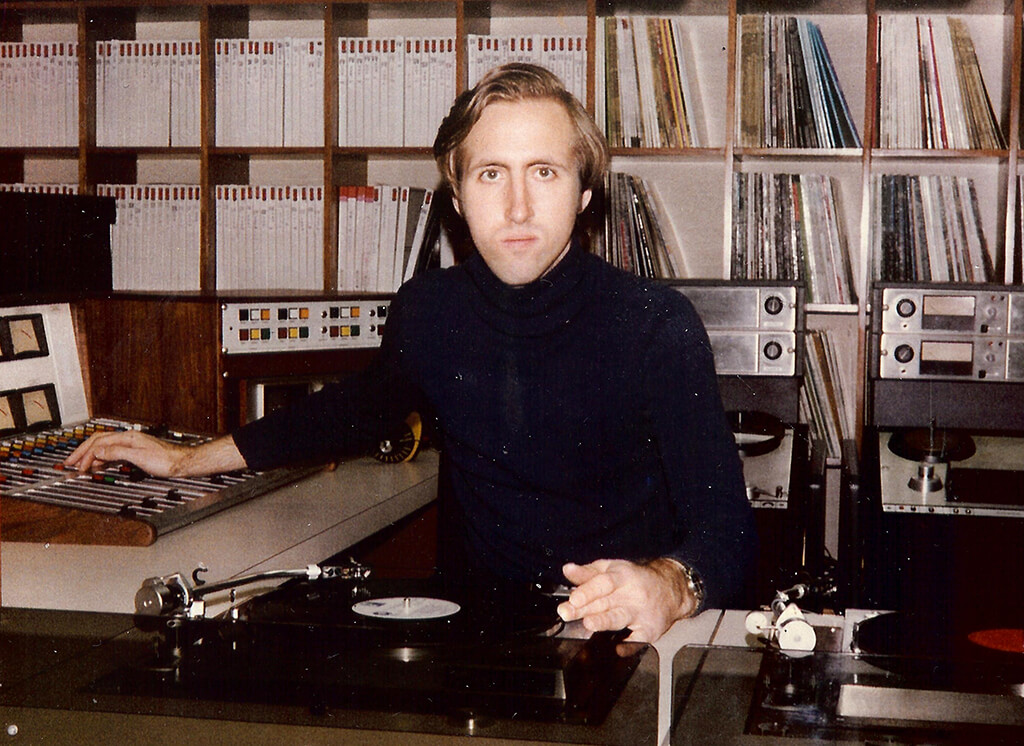
On the right is Greg Katkowski, who joined us in New York as a mastering technician to build our tape library, which is how our musical library was delivered to our client stations.
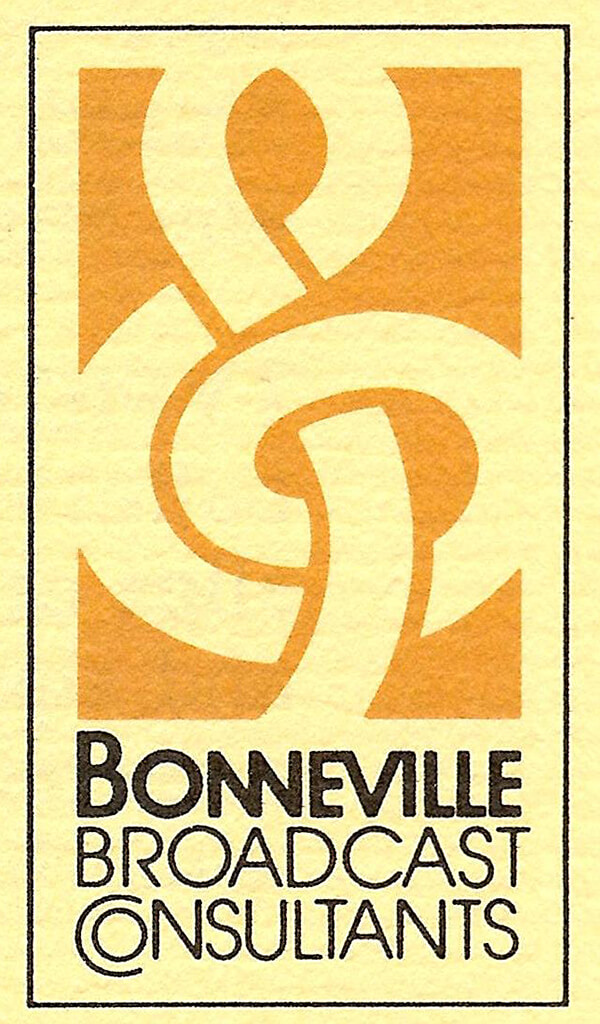
After a brief period as Bonneville Program Services, we transitioned to the more inclusive name that better represented what we were providing to our stations!
To wrap up this portion of the photo collection tied to my radio career memoir, RADIO … My Love, My Passion – here’s a photo of the one-and-only Nana Mouskouri … the Greek folk singer who achieved new fame in New York from being played on WRFM!
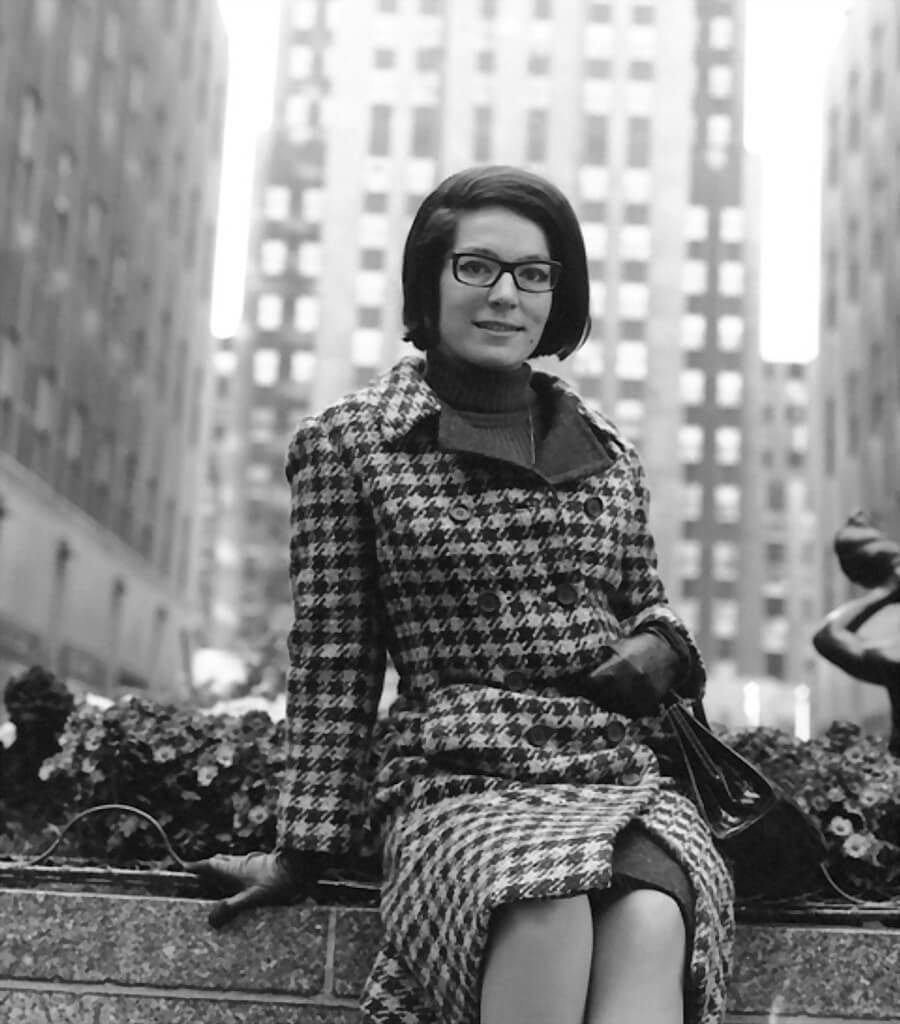
It was the Fall of 1969. I was in the fairly extensive WRFM library, rummaging around looking for recordings to possibly play – we were still playing from LPs, one track at a time, to get the desired sound blend. I came across an album by Nana, whom I was barely familiar with at the time. Pulling it out and looking at the contents, I spotted a Mexican mariachi tune named “Cu-Cu-Ru-Cu-Cu Paloma,” so I put it on the turntable and listened … I was intrigued, enough so that I took the record and headed to the control room, telling the announcer (forget who it was) to play in place of the next scheduled vocal. He listened to a little on cue, turned up his nose … but it was played! Before the song ended, the phones began to ring: “Who is the singer?” “Where can we buy the record?”
BTW, Nana is about to turn 92 (just ahead of yours truly) and, according to her Facebook page, has made the tough decision to end her days of touring.
That’s all ‘til next time! Thanks for reading! Would love to have your comments or questions!








What a phenomenal narrative — this cuts through all the distractions of what is lost in today’s private equity radio and reminds us what creativity, good programming and marketing can do. Having worked for you remains the privilege of my career.
Jerry – I am just one generation removed from a family of farmers; so, I feel truly blessed and privileged to have been gifted with the radio-related talents I possess! Also, it’s also an honor to count Cheryl and You among my friends!
Awesome story, Marlin! So glad I had the privilege of meeting you at Redland BC. Thanks for sharing your amazing journey!
Thank you, Don, for those kind words!
I hope to get back down there sometime soon for a Sunday visit.
My best to all!